Grab your sunnies, pack your adventurous spirit, and get ready to dive headfirst into a tantalizing paradise as we jet off to Southeast Asia. 🌞
Home to numerous ancient temples, spicy street food, and stunning landscapes, you’re in for a treat. 🛕🏝️
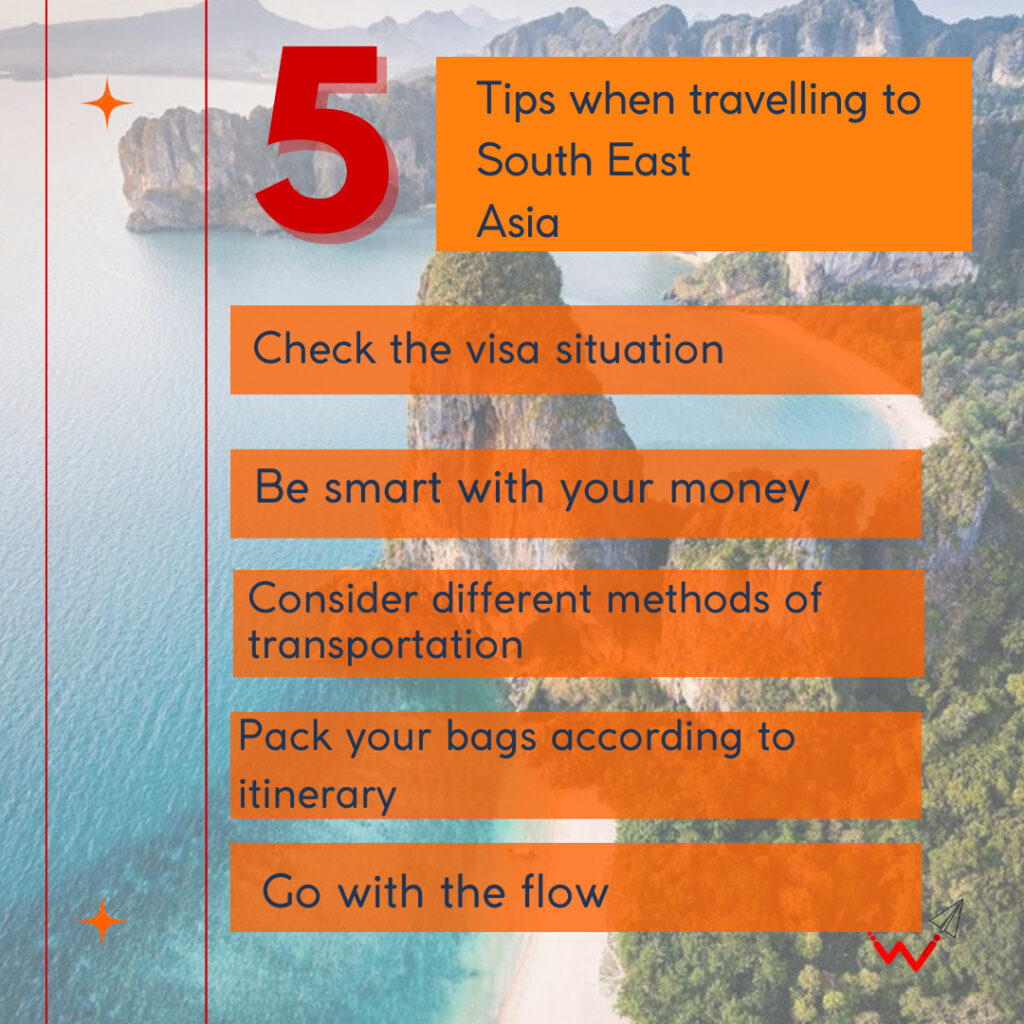
If you’re a first time traveler to SEA or traveling to a neighboring country, here are some tips for you:
🌐 Check the visa situation
Visa requirements change from country to country. Some countries allow visa-free admission or visa on arrival, but others require you to apply for a visa ahead of time. Make sure you understand the visa requirements for every country you intend to visit as well as your place of origin. Also, make sure your passport has enough validity and space.
🌐 Be smart with your money
Southeast Asia is often a low-cost vacation, but you must still exercise caution and avoid frauds. Use ATMs rather than money changers, bargain before hiring a cab or tuk-tuk, and research prices before arranging trips or activities. Keep some cash in local currency on hand for emergencies or little expenditures.
🌐 Consider different methods of transportation
From buses and trains to flights and ferries, SEA has various transporation options. Depending on your time, budget, and comfort level, you can choose the best way to get around. Flights might save you time and stress across great distances, but for shorter trips, buses and trains can be less expensive and more scenic. You can also rent a motorcycle or bicycle to explore the surrounding countryside or city.
🌐 Pack your bags according to your itinerary
Southeast Asia has a tropical climate that is hot and humid most of the year. However, depending on the season, some areas may become cooler or rainier. Pack light, loose cotton clothing that will allow you to be comfortable and respectful in a variety of contexts. A rain jacket or umbrella, sunscreen, insect repellent, and a hat may also come handy. also , don’t forget to pack any prescriptions or vaccines you may need.
🌐 Go with the flow
Prepare for a trip full of surprises and chances when traveling in SEA. Don’t stick to a rigid itinerary or expect everything to go smoothly. Be adaptable and open to new experiences and cultures. Delays, cancellations, language barriers, and cultural differences may occur, but don’t let them ruin your trip. Instead, embrace the challenges that may arise and make the most out of your trip!
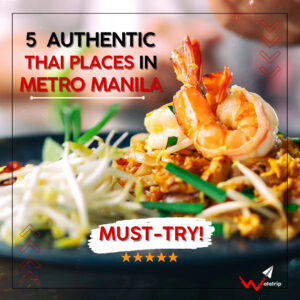
Let your taste buds delight in authentic-tasting Thai cuisine in Metro Manila.
Known for its blend of salty, sweet, sour, and spicy flavors, Thai food is simply impossible to resist.
From fragrant curries to fiery salads, each bite tells a story of exotic herbs and aromatic spices.
So, if you’re up for it, get on a culinary adventure and let the vibrant meals at these restaurants transport you to Thailand’s bustling streets (sans the plane tickets!) 😉
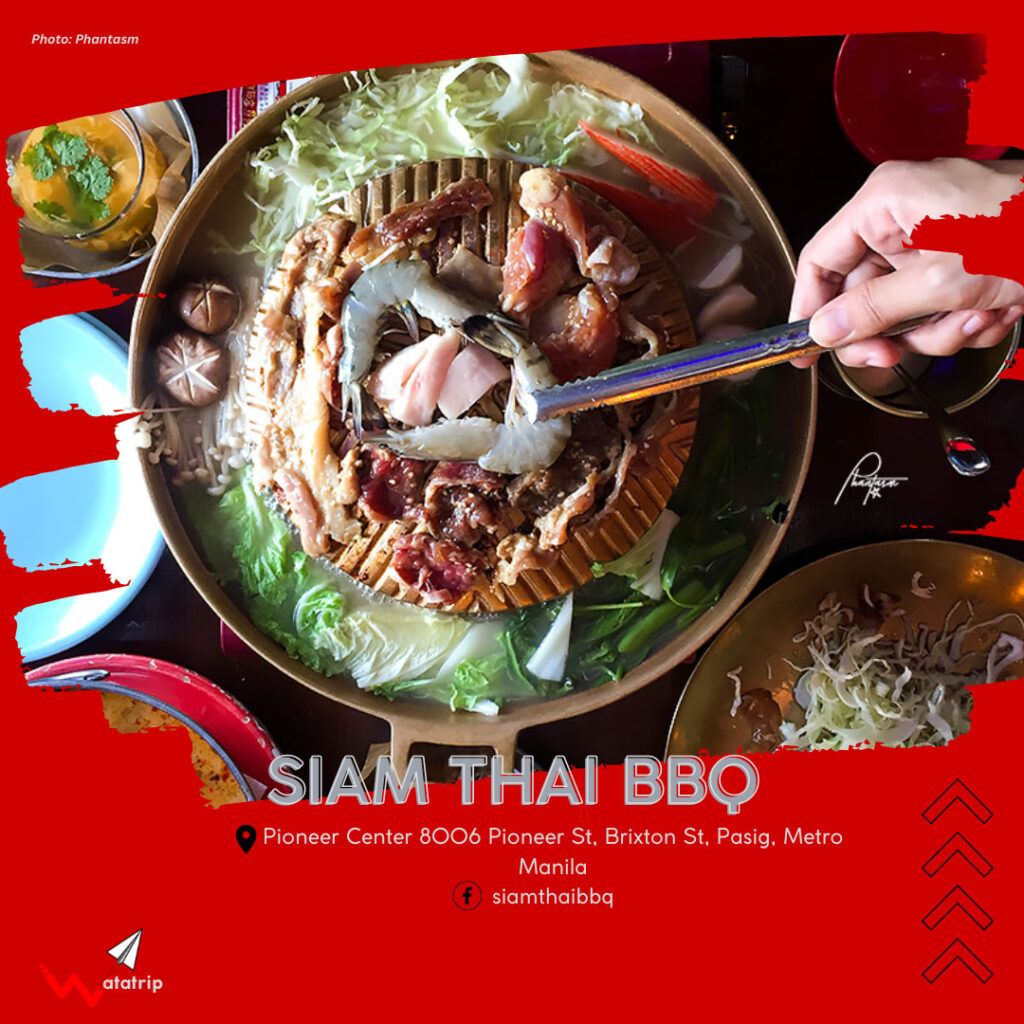
Siam Thai is a casual Thai restaurant and neighborhood watering hole located in Kapitolyo. You’ll love this place for their delicious pad thai, tom yum soup, and curries.
They also have a mookata grill at the center of each table, which you can use to grill meat and veggies over charcoal.
Complete the dining experience by ordering any local microbrews carried by the resto.
💸 Price range – Php 150 – Php 370 ⏳ Open for dine-in, takeout, and delivery 📍 Pioneer Center Supermart Compound, Brgy. Kapitolyo, Pasig City
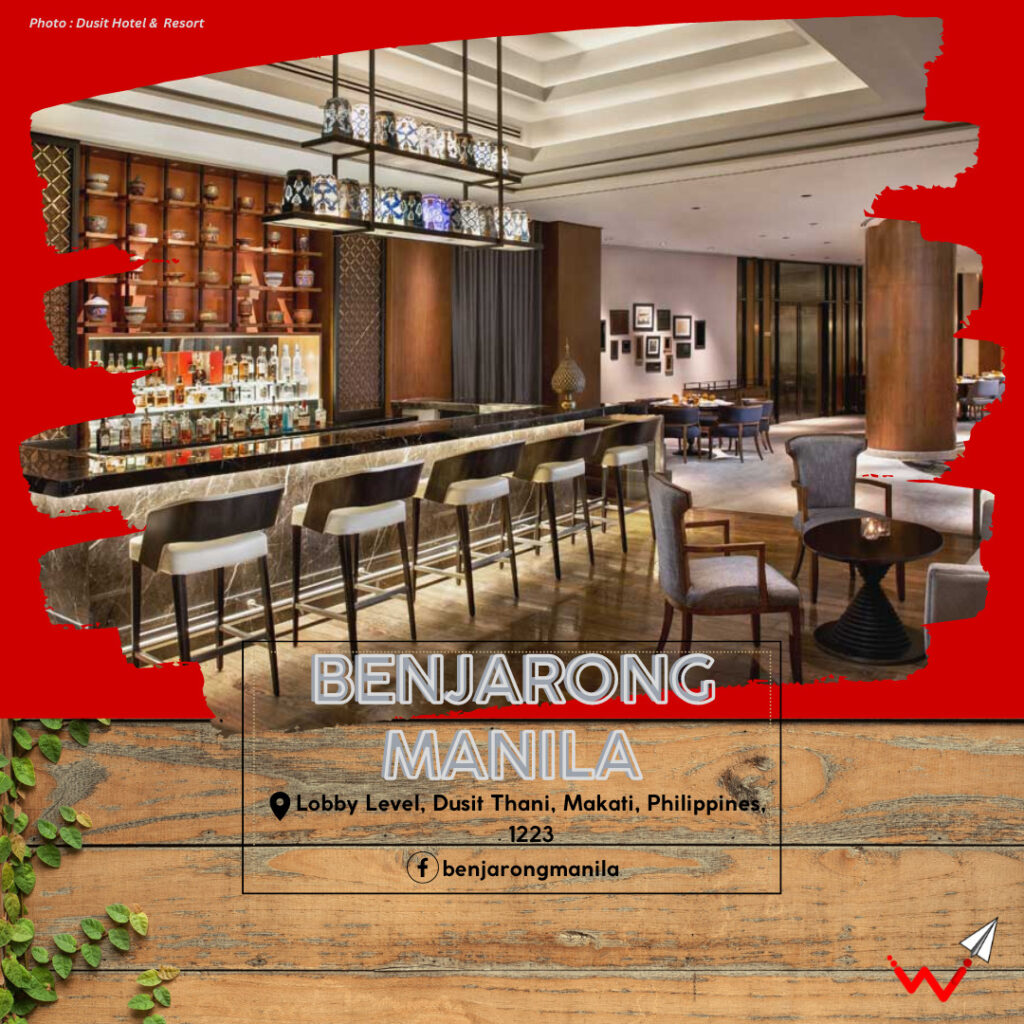
Benjarong Manila is a Thai restaurant located at the ground floor of Dusit Thani Manila in Makati City, known for its authentic Thai cuisine prepared by Chef Ja, a Thai national who has been with the restaurant since its opening in 2018.
Named one of the top 20 best restaurants in the Philippines by Philippine Tatler in 2018 and 2019, Benjarong has a stylish, modern interior with intricate Thai murals and sculptures adorning the walls.
Must-tries here include Tom Yum Goong (spicy shrimp soup), Pad Kee Mao (stir-fried rice noodles with basil, chicken, or tofu), Som Tum (papaya salad with shrimp, chicken, or tofu), Pla Ra (steamed river fish with chili sauce).
💸 Price range – Php 500 – Php 5,000 🪑 Indoor and outdoor seating 📍 Ground Floor, Dusit Thani Hotel, Makati City
Doon Thai and Asian Fusion Cuisine is one of the cheapest Thai restaurants in Metro Manila, and is popular among locals and tourists alike.
Located in Malate, Manila, this restaurant offers a wide variety of Thai and Asian fusion dishes. Aside from their famous seafood pad Thai, you should try their Thai fried rice with crabmeat, a mixture of rice, crabmeat, shrimp, chicken, pork, or tofu, served with a side of vegetables.
The restaurant also has a full bar, offering a variety of Thai beers, wines, and cocktails.
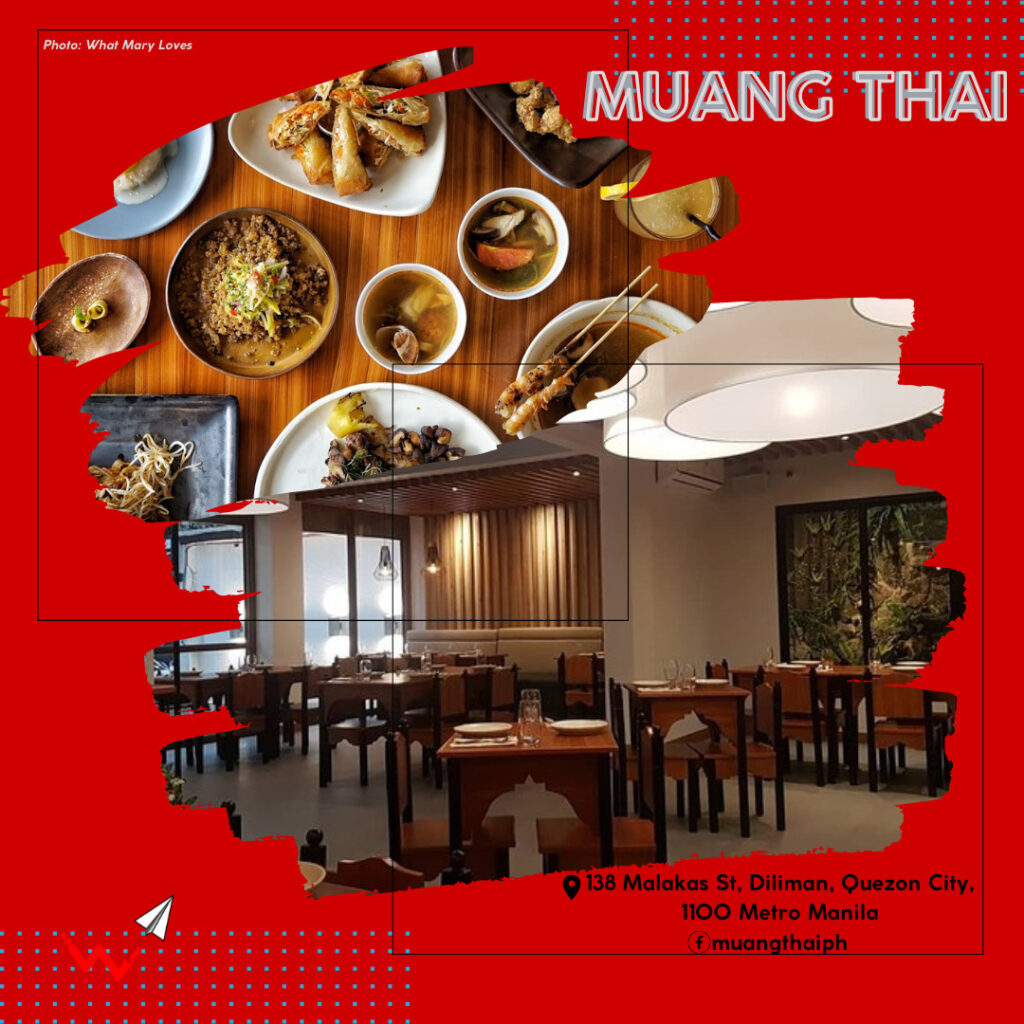
Muang Thai is a casual dining restaurant in Diliman, QC, that serves some of the most authentic-tasting Thai cuisine in the country.
As usual, their pad Thai and curries are popular, but people also rave about their bagoong rice, which surprisingly tastes good with their mildly flavored spring rolls.
After you’ve gotten your fill of hefty meals, cap your visit with their delectable mango sticky rice.
💸 Price range – Php 150 – Php 430 🕜 10AM to 10PM – M-Sun 📍 138 Malakas St, Diliman, Quezon City
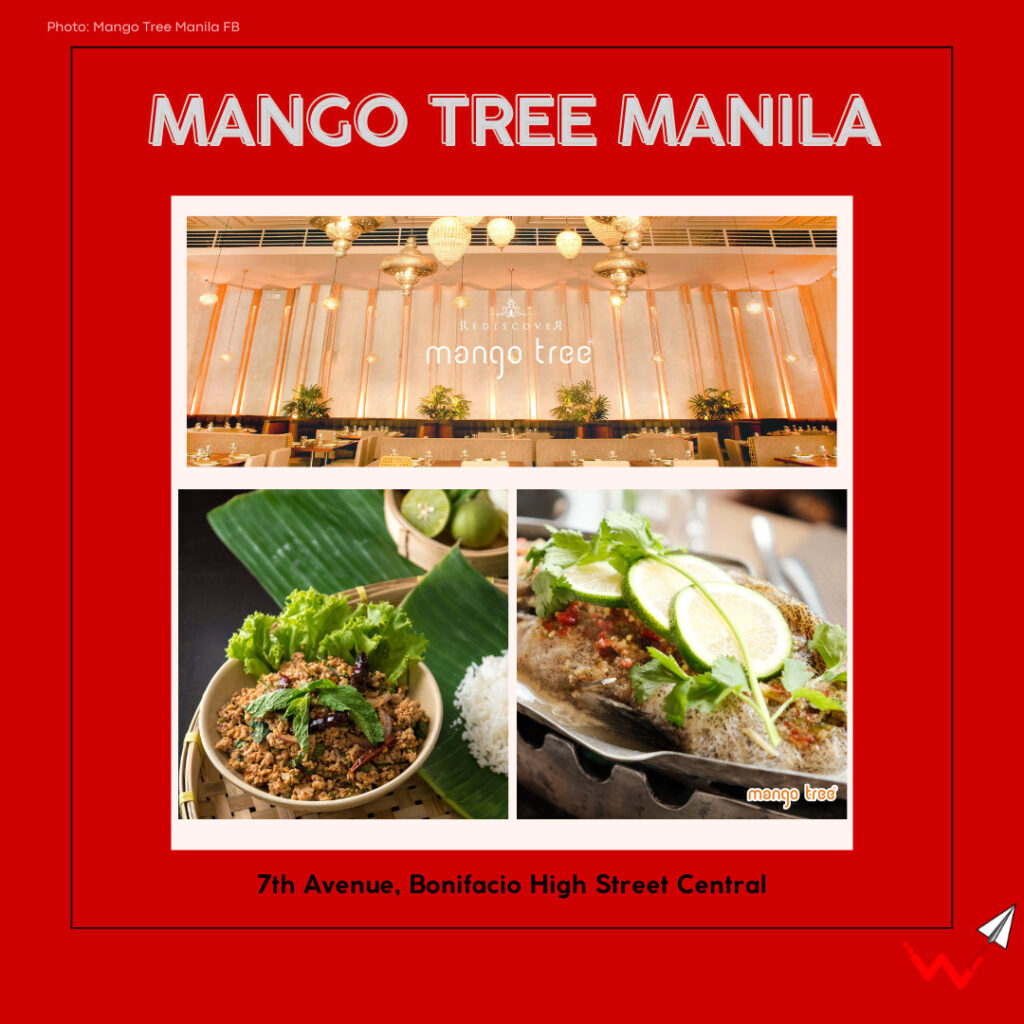
Owned by restaurateur Eric Teng, Mango Tree Manila is a world-class restaurant that showcases the best of Thailand’s four regions.
The interior of the restaurant exudes elegance and sophistication with its high ceilings, wooden accents, and plush seating.
The use of traditional Thai cooking methods and the high quality of their food distinguish the restaurant from other Thai restaurants in the country. Making sure that they serve food cooked with fresh, authentic ingredients, which their steamed seabass with lime sauce is proof of.
💸 Price range – Php 320 – Php 1550; Lunch buffet Php 780/head 🕜 11AM – 3PM | 6PM – 10PM 📍 7th Avenue, Bonifacio High Street Central, Taguig City
Cagayan de Oro is one of the Philippines’ underappreciated destinations.
It does not receive the praise it deserves (in our opinion). It’s not the first destination that springs to mind when thinking about tourist attractions and must-sees in the country, YET this vibrant city has so much to offer. (We’re not kidding!)
Located on the north coast of Mindanao, the second-largest island in the Philippines is home to a wealth of activities and attractions, from whitewater rafting and kayaking to hiking and camping.
But what really sets Cagayan de Oro apart is its people. The locals are known for their warm hospitality and friendly smiles, which is why the city has been dubbed “The City of Golden Friendship.”
Also, if you’re looking for an adventure, Cagayan de Oro is the perfect place for you. With its stunning scenery and endless activities, you’ll surely have a blast. And with its friendly people, you’ll feel right at home.
Here are some sites and activities that we think you should try in CDO:
Larry’s Hill Adventure Center is an outdoor adventure park located in Barangay Indahag.
If you’re looking for an adrenaline rush, then Larry’s Hill Adventure Hub is the place for you. You can rappel down a cliff, zipline through the trees, or try your hand at a labyrinth adventure. And if you’re feeling really adventurous, you can even try bungee jumping or bouncing around in a ball pit.
This place is definitely for all ages, providing a fantastic experience for children, adults, and thrill-seekers.
Entrance fee is only P50, but rates vary per activity.
Here are some additional tips for your visit:
Wear comfortable clothes and shoes that are appropriate for the activities you plan to do.
Bring a hat and sunscreen to protect yourself from the sun.
Drink plenty of water to stay hydrated.
Be aware of your surroundings and follow all safety instructions.
Ahoy, mateys! If you’re looking for a place to cool off on a hot day, you better visit Seven Seas Waterpark & Resort.
This waterpark is the largest pirate-themed waterpark in the Philippines, and it features over 12 thrilling slides, a 5,000 square meter dual wave pool, a 400-meter-long lazy river, and many more family-friendly activities and services.
The waterpark is divided into several themed areas, including the Pirate Cove, the Kids’ Cove, and the Adults’ Cove. The Pirate Cove is home to the park’s most thrilling waterslides, including the Cyclone, the Riptide, and the Plank Drop. The Kids’ Cove is a safe and fun place for children of all ages, with waterslides, fountains, and a giant sandbox. The Adults’ Cove is a more relaxed area, with a swim-up bar, a hot tub, and a sundeck.
In addition to its water attractions, Seven Seas Waterpark & Resort also has a number of other amenities, including a restaurant, a gift shop, and a picnic area. There are also a number of shaded areas throughout the park, so you can take a break from the sun when you need to.
It is the perfect place to spend a day with your family and friends. With its thrilling slides, lazy river, and wave pool, there’s something for everyone to enjoy. And with its pirate theme, the waterpark is sure to be a fun and memorable experience for kids and kids at heart.
The Divine Mercy Shrine in Cagayan de Oro City is a beautiful and serene place to visit, which was built in 2008.
The shrine is located on a hilltop in the town of El Salvador, which is about 15 kilometers from the city center of Cagayan de Oro. It overlooks the city and the Macajalar Bay.
The main attraction of the shrine is a 50-foot statue of Jesus Christ, which is surrounded by lush gardens. The shrine is also home to a church, a healing chapel, and a museum.
The shrine is a popular pilgrimage site for Catholics from all over the world and is also a great place to learn about the Divine Mercy message, which is a message of hope and love.
Visitors come here to pray, to reflect, and to experience the peace and tranquility of the place.
If you are looking for a place to relax and connect with your spirituality, then visit the Divine Mercy Shrine.
Mapawa Nature Park is a hidden gem in Cagayan De Oro, Philippines. It’s a great place to escape the hustle and bustle of the city and enjoy some peace and quiet.
The park is home to a variety of wildlife, including monkeys, birds, and butterflies. There are also several waterfalls and swimming holes, perfect for a refreshing dip on a hot day.
If you’re looking for something a little more adventurous, you can try your hand at rappelling, zip-lining, or horseback riding. The park also offers a variety of guided tours, so you can learn more about the local flora and fauna.
Here are some additional details about Mapawa Nature Park:
Location: Barangay Cugman, Cagayan De Oro City, Philippines
Nestled in the lush hills of Cagayan de Oro City, Philippines, is the Gardens of Malasag Eco-Tourism Village. This 2.2-hectare bio-sanctuary is home to a variety of plants and animals, as well as a number of activities and attractions for visitors to enjoy.
One of the highlights of the Gardens of Malasag is its beautiful gardens. The gardens are home to a variety of flowers, plants, and trees, including orchids, bromeliads, and fruit trees. Visitors can wander through the gardens, taking in the sights and smells of the natural beauty.
The Gardens of Malasag also has a small zoo, where visitors can see a variety of animals, including monkeys, birds, and reptiles. The zoo is a great place to learn about the different animals that live in the Philippines.
In addition to its gardens and zoo, the Gardens of Malasag also has a number of other activities and attractions for visitors to enjoy. These include a swimming pool, a picnic area, and a playground. There is also a restaurant on site, where visitors can enjoy a variety of Filipino dishes.
The Gardens of Malasag Eco-Tourism Village is a great place to relax and enjoy the natural beauty of the Philippines. It is also a great place to learn about the different animals and plants that live in the country. Whether you are looking for a place to relax or to learn, the Gardens of Malasag is a great option.
If you haven’t been to CDO, wait no longer, book that flight and experience this marvelous place.
Food has always been a natural attraction to us, especially the intrepid kind. Whenever we go out for our travel adventures, one of the things on our must-try list would be local gastronomic fares.
And why not? What used to be just a source of sustenance for mankind has evolved into an art form in itself – a play on the taste, the visual, the smell, the texture.
It is not surprising that with all the different ways of cooking as well as accessibility to the market, the food business has turned into a billion dollar industry. Restaurants as well as food expos are right in the heart of tourism, be it for local and foreign tourists alike.
It has long been established that one of the identifiable traits of a culture is manifested in its cuisine. The many ways of a culture’s cooking brings an abundance of stories spanning generations. One can’t find a more varied and bold sensation to the palates than in Southeast Asia.
…an ART FORM in itself – a play on the taste, the visual, the smell, the texture.
CREATIVE TOURISM
The region has always been a literal melting pot of different cultures. From the Malays, to the Indo-Chinese, to the former Western colonizers, and indigenous traditions, Southeast Asian food culture is an amalgamation of all of these influences.
The region is mostly tropical and agricultural. Chili and other spices are a plenty. Countries in Southeast Asia incorporate spices in their daily meals. A tourist shouldn’t be surprised with the locals’ high tolerance for spicy food. And while this may be so, restaurants and other food places will still ask their patrons as to their preferred level of spiciness. Famous spiced sauces in the region are sambal and curry.
Being agricultural, rice is THE food staple. For most of Southeast Asians, a meal is not complete without rice. Fish, meat and vegetables are the side dishes to this staple. Other derivatives of rice can be seen in noodles, bread and pastries, and even alcohol.
Festivals abound in Southeast Asia. Feasts are held in the community for a bountiful harvest. Families also gather for weddings, birthdays, and even the passing away of relatives. As can be guessed, spices and rice dominate tables in these households.
The next time you’re planning a trip to Southeast Asia, look out for food festivals to join the fanfare and experience the unique flavors on offer.